
Why Our Family Eats Animal Products: Part One
There was a one month period of time in the sixth grade when I wanted to be a vegetarian. My best friend Andrea had given up meat, and not wanting to be left out, one night at the supper table I declared that I did too. In the mid-western farming land of meat and potatoes that didn’t go over too well. And my own personal desire didn’t last long either – the hamburger casserole so familiar to my body eventually became too much to resist.
It didn’t hurt that my dad’s side of the family was a farming family. Now that I am more aware of what healthy eating truly is I am so thankful for my farming roots. Because of them the word margarine was gasped at, whole milk was the only option, and my father tells stories of homegrown steak for dinner so often that he grew tired of it. With hard-working farmers for grandparents; meat, milk, and eggs seemed like real food because I could hold the hands of those who raised them.
So I have always been a carnivore. For a while in college, when I was obsessed with eating no more than 1800 calories per day, I only ate small amounts of turkey and chicken. The bulk of my protein came from canned beans. I ate no eggs and drank only soy milk. I probably went at least 6 months without eating red meat, but when I finally did it felt so good. Something in my body has always wanted meat, eggs, and milk.
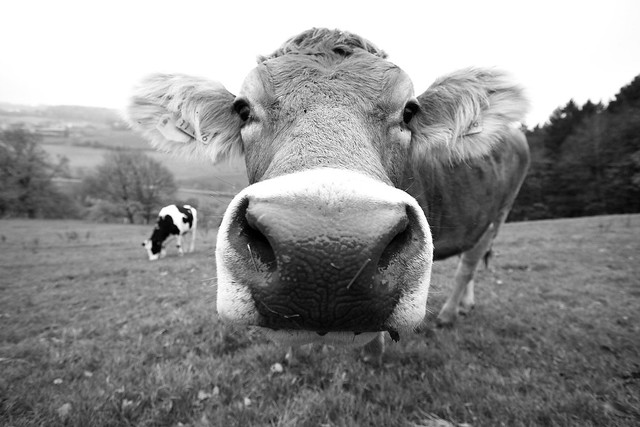
But the meat, eggs, and milk that we now know are a far cry from that which my grandparents grew up on. They may have had a family cow produce their milk, or perhaps had the milk man deliver it from the local creamery which collected milk from the neighbor’s grazing cows. Now you can buy milk by the gallon, never knowing that the cows have no room to move, stand in their own feeces all day, and are so sick from it that they have to be shot up with a cocktail of antibiotics. If that wasn’t enough they also get hormones to increase their milk production, which gives them mastitis, leaving puss in the very glass of milk that we hand to our children.
So why not avoid animal products all together? Do we really need them?
I believe that our bodies do need animal products, and here is why:
Nutrient Density.
This is my #1 reason, and I believe it could stand on it’s own. During my first pregnancy I suffered from low iron. I was told to keep eating lots of greens for their iron. One day I came across some information about how we absorb iron from plants vs. animals. Apparently the iron found in meat is called heme iron, similar to our own hemoglobin, and is absorbed much more readily. With my second pregnancy I kept up with lots of greens but I began to be more mindful about eating some high-iron meat every day. What a difference it made. Now that I am more aware of the benefits of liver and other organ meats I will be incorporating them in if we are blessed with another baby.
Iron aside, seafood, meat, eggs, and dairy contain a concentrated amount of the vitamins, minerals, and fats that our bodies need. Over the past century we have been told to move away from animal foods and fats and towards vegetable oils, with a skyrocketing rate of heart disease and diabetes as a result. Our bodies, especially children and pregnant/nursing mothers, require the saturated fat, cholesterol, and essential fatty acids found concentrated in animal products.
I’ve written more about good fats here and here.
Animal Products Are A Traditional Food.
If you are a follower of Dr. Price’s work then you have probably read about the vast use of animal products in all of the different isolated cultures around the world that he studied. At one point during his travels and research he was on a mission to find one culture that did not rely on animal products at all, seemingly to prove the point that we do not need animal products for health. He was unable to and concluded that the robust health of these cultures who ate vastly different diets were all connected by the use of some form of animal products and the nutrients produced by them. More specifically, their fat-soluble vitamins.
While I don’t believe that a food being traditional makes it a necessity in one’s diet, I do believe that in this case it is clear evidence that eating animal products is related to good health. I believe that the saying "eat what your great grandparents would have eaten" is well applied to the use of animal products.
Tomorrow I will post part two of this series, which is a collaboration with my husband. In the third part of this series I will share resources for where to find pastured animal products as well as details on how we maintain a budget while eating them.
How about you… why do you eat animal products… or why not?
I do believe some animal products need to be included in order to have a healthy diet. Of course, the kind of animal products can vary widely depending on what’s available in a given location, or what you feel your body needs individually. The world of animal products reaches far, from eggs to red meat to seafood and even to insects (though I admit you won’t see me eating a bowl of caterpillars anytime soon). I personally put a lot of focus on raw dairy (lots of butter!) and good eggs, though we do eat meat almost every day, too. With my family’s ancestoral background, I think this mix makes a lot of sense.
Price’s work on this subject is extremely beneficial for those who wonder whether mankind should be eating animal products. The nutritional value of these foods is unmatched, and traditional societies placed a lot of importance on eating them (especially for babies, children and adults in child-bearing years).
It seems like your site must hate vegetarians. 🙂 I submitted it and then it disappeared and I couldn’t access the site for a while. Here’s a condensed version of what I said.
I’ve wanted to be vegetarian for as long as I can remember. I was vegan for four years and that was an obviously healing diet for me. Any time I’ve tried to add healthier versions of animal products (like the ones you promote here, not conventional ones), I’ve seen a re-emergence of symptoms from a wide variety of old health problems.
My family eats eggs from backyard chickens now, and I appreciate having a local protein source, but I don’t know if I’ll stick with it since I seem to be flaring up again since I started eating them. So we’re not vegan, but I do have ethical objections to meat, dairy products, and commercial eggs, even from more “humane” conditions.
Luckily, vegetarianism just seems to suit me. Vegetarianism even healed anemia for me. I grew up having meat at every meal, including red meat every day, and I still struggled with clinical anemia almost constantly throughout adolescence. Veganism stabilized my blood levels for the first time, including through pregnancy, and I’ve never had a problem again.
I had severe sinus problems leading to several surgeries when I was 18, and I can trace that issue to an undiagnosed lactose intolerance. That problem, too, only recurs when I take in dairy products. I went vegan a few weeks after I was diagnosed with fibromyalgia (though not *because* of the fibro – I had no concept of using diet to heal from illness back then), and I couldn’t believe what a remission I experienced as a result. So, for me, vegetarianism seems appropriate. Animal products are obviously harmful for my body, regardless of their origin.
But that’s not a prescription for anyone else. My particular health journey is specific to my body, my history. My ethics are my own, not a judgment on others. I’m thrilled that more people are becoming aware of the problems with highly refined diets. I appreciate all that I’ve learned from followers of indigenous diets. I just thought I’d share my experience, because I think it points to the importance of appreciating biochemical individuality. Your body seems suited for animal foods. My body revolts at animal foods. The important thing is that we know this about ourselves and can be supportive of each other as we seek nutrient-dense diets appropriate for our individual bodies.
I’m going to copy this comment in case it gets lost again!
I do eat animal products, but I am conscious of where I get them, both for health and ethical reasons. I get raw milk and free range eggs from a herdshare arrangement, and I try to limit meat to what I can afford to buy from that farm (it’s grassfed, organic beef, free range chickens). This means that we don’t eat meat every single night, but eggs and beans are a good source of protein when money is tight.
Yes, we eat animal products, the most humanely raised we can find and afford. Thankfully I have been able to find local sources that I trust for most of what we eat.
(BTW, Chandelle would probably like the blog Green And Crunchy.)
I don’t support factory farms. I do believe that eating animal products allows us to produce food in ecosystems that are not suited for other food cultivation (plant crops).
If we stop eating meat, we condemn all the heritage livestock that cannot survive without humans. There are some truly beautiful and unique domesticated animals out there.
I function better w/ animal based proteins in my diet, but I also include a wide range of plant material as well and try to avoid processed foods.
I remember reading (I think it was in Taub’s book) that there are some people who don’t have the ability to convert one of the amino acids from plants into a form usable by the human body. I am most definitely one of them. During the six months that my naturopath recommended I go on a vegetarian diet I felt as horrible as I ever have for an extended period of time. Energetically, I tend towards deficient energies–from an acupuncture standpoint I would recommend someone like myself eat small amounts of meat.
At this point we do well with sustainable beef–we have a WONDERFUL man from whom we buy a quarter of a cow for our family. I am purchasing more organ meats (which I can get cheaply). I don’t have a good source of pastured chickens, but when one of the farmers has them, I grab them up greedily so that I can purchase them.
We eat eggs and some dairy, but I have difficult tolerating dairy (although January 2 is my day to start GAPS and we’ll see if that changes in 6 months).
Chandelle, I would like to add that I know a couple of other people who have your negative reaction to animal products. One I know can eat dairy but I am not certain about the other.
I have been giving this some thought the last couple of days. Honestly, I could go either way. I don’t feel as if I need meat. But, for my kids and husband – they like their meat. Therefore, I only buy organic/local if possible and humanly raised. Because it is so expensive, we eat less meat than probably most. Lately out of all the “diets” I have been reading about – they all have one thing in common – eat lots of fruits and veggies. So, that is where I have been putting my focus.
I just had to say that I grew up on a dairy farm in the southwest and my parents still own it. Their cows have plenty of room to move around and do not stand in their own feces all day. Things are kept very clean. If a cow has mastitis or is on antibiotics, her milk is not combined with that of healthy cows so it does not go to the consumer. Also, most cows do not need antibiotics. I myself got mastitis while nursing both my boys and I was thankful that my doctor put me on antibiotics. I just want people to know that not all dairy farms operate the way you said. Some may, but I really think that most want healthy cows and clean facilities.
So what if all you can afford or have access to is conventional meat? Is that better than no meat at all?
Hi there! I’ve been following your blog for a short time now and thought this was a good time to comment! I love it that people are starting to realize that eating fat isn’t what is making us fat or unhealthy individuals! I live amongst the “non-fat” or “low-fat” supporters and I cringe at their reasoning for using those types of products. Our bodies have to have some fat to be able to absorb nutrients correctly. It’s a fact. That’s why we eat it here in my household. I think including a normal amount of animal fats in our diets is just like including a normal amount of everything else. As far as how much, we eat a “vegetarian” meal 2 or 3 nights a week. I don’t feel like we have to have meat on our plates every night because I too focus on the dairy a lot…I eat what some would consider way too much butter, vitamin D milk, eggs and yogurt…all free range/organic or what have you. I also looove fruit…but havenoticed for myself that in trying to cut back on the dairy and meat and increase fruits and vegetables…I feel awful. I’ll get nauseated and shakey…irritable…just not myself and then I turn into Mrs. Carbohydrate and long for candy and bread which makes it 10x worse! lol. I think it’s important to note that for some people (I suppose not all) when you alter your fat intake, you’re also altering your protein intake as well as your sugar intake…by way of how your body recognizes whatever it is you eat. In other words, it wouldn’t be surprising for a person to quit eating fat, and suddenly experience blood sugar issues…because your body has to have fat to process the food you eat correctly and efficiently. For someone like me who isn’t diabetic or a heart patient (though these are the people who are probably most negatively affected by not eating fat), altering the amount of fat I take in quickly alters my body’s “levels” and I suddenly have cravings and mood swings like I’m someone else!! I guess everyone’s body is different but for us, eating a diet that includes what some would say is a generous amount of fat in each meal…is what keeps our bodies feeling “right” and honestly…trim!
i just find this so confusing. everything i have read on the wapf/native nutrition/paleolithic/primal nutrition angle says we need meat and animal foods and lots of it….
so when i read about chandrelle’s experience, which very much sounds like she healed a serious disease, anemia, by NOT eating animal products,it gives all the previous mentioned info a run for its money…
thoughts?
@emily, I think the lesson to learn from that is that everyone’s body chemistry is different, thus they tolerate different foods differently. There is no “right” way to eat. Somewhere in a WAPF article or in NT (can’t remember) I remember even reading them not necessarily discouraging a restrictive veg diet in certain circumstances- they state that in the spring and early summer when fresh fruits and veg are plentiful a meat fast can be cleansing and healing, but that most of the general populations is not going to benefit from maintaining this year round. But obviously there are some exceptions. I’m no doctor or scientist, but my guess is that, as someone said about some people lacking the amino acid to properly get all nutrients from plants, others probably lack a similar enzyme (or whatever) that helps them digest meat. It’s a very complex thing that likely relates loosely to our ethnic heritage. But I think that the whole food community having this conversation about the health benefits of responsibly raised animal products is important because I think that the benefits, ESPECIALLY to babies, children, and pregnant and child-bearing-age women is often overlooked. Most doctors push veggies and greens (which is fine) but don’t say a word about meat, fat, or protein. AND they harp on the expecting mom to not gain too much weight, which could give her the idea she should avoid nutrient dense foods like meat and dairy products.
So we all just need to listen to our bodies and eat what makes us feel good (and not good in the way that a brownie full of processed sugar makes us feel right after we eat it, I mean long term good).
I appreciate seeing another blogger write about this subject. I recently wrote a bit about my thoughts on it- here’s the link: http://gracified.livejournal.com/135544.html
Anyway, thanks for writing this. I’m looking forward to reading tomorrows bit!
Carmen, It doesn’t matter how clean you think your parents cows are – if they are eating soy and corn or other grains, they are unhealthy Peroid.
We do eat animal products, for pretty much all the reasons you listed. Besides that, in our area of the country, organic is not “in” as in so many areas, and organic produce is hard to come by. So we make do with what we can get, and have to use conventional for the rest. I haven’t gotten great at gardening yet, though I’m working on it. However, it has been VERY easy to raise our own chickens in the backyard (on a small suburban lot) and have fresh, free-range healthy eggs. And I can buy raw milk locally, and local properly-raised pastured meats. So I like to think what is lacking in our diet from the lesser-quality produce we sometimes have to make do with, is at least in part made up by quality animal products and some supplements.
Personally, I don’t do well on a low-animal-protein diet…makes me feel really bad. It’s interesting to read how others do well on vegetarian or grain-free diets. We’re just all so different!
I was a vegetarian, then a vegan, for twenty years. After my third son was born he was screened for carnitine deficiency and his carnitine was the lowest it could have been and not be zero. They tested mine–it was also near zero. Carnitine is a substance one needs in order to metabolize energy from fats in the diet. Without it, one can get very fatigued and even have heart damage. It explained why I had had so many blood sugar issues, or what i thought were blood sugar issues; my body wasn’t burning dietary fats for energy.
I went back on an omnivorous diet, including beef and pork–the best sources of carnitine. Then I learned I had celiac disease.
Bottom line is, for me, a meat-veggies-fruit diet, with some non-gluten grains, is the best option. I would suggest any moms who are pregnant to take carnitine supplements, especially if they are vegetarian; many states screen newborns for carnitine deficiency. For six months of my son’s life we thought he had an inborn error of metabolism, but it was just his body reflecting my very low level of carnitine.
I have been anemic most of my life. I have also had Candida yeast for 17 years. I had found a study that showed that Candida yeast feed off of host iron. My levels were so low that the dr was going to recommend “transfusions”. I am not sure exactly what transfusions he was talking about but it scared the heck out of me.
At this point I was eating meat 1-2x a day. I ate salads daily and lots of red meat. I was also eating organ meats. I was totally baffled by my test results.
Anyways, I had stopped taking Iron pills because GAPS diet said that all it does if feed the Candida. I ordered kefir grains, milk kefir grains and yogurt culture. These have helped me so much. My Candida is finally going away. I normally follow low carb (very little grains), nourishing diet as described in NT book.
My last iron test showed good normal iron levels without supplements.
So the main point here is that I had to tackle the pathogenic yeasts and replace them with good bacteria/yeasts to finally absorb my vitamins/nutrients. Previously it did not matter how much iron from foods i was ingesting. It was not being absorbed because it was being stolen by the yeasts.
I eat only from the animal kingdom, and feel better than I have since high school (just hit the big four-oh).
Chandelle, there is a huge difference between having a normal variation in one’s genetic makeup, and having a health problem. You are not an herbivore. If you can’t consume animal foods without negative health response then there is something wrong with your body.
I don’t know how to put it any plainer than that. I applaud everyone here who has been polite about this but I don’t want you convincing some impressionable young mind out there that they’re just a normal variation going in an evolutionary direction that will eventually separate from the rest of the species, so why not adopt a diet that ultimately will destroy their health.
I can’t be sanguine about this. For three years I suffered from menstrual problems that would have sent any woman with health insurance running screaming for the phone to get an appointment with their GYN. I didn’t have health insurance and none was forthcoming. It was so bad the first day or three of the cycle that I often had to stay home and use rags from the rag bags to supplement my usual period repertoire.
Last year I read something at the WAPF website about vitamin A and how people with certain health conditions can’t convert beta carotene (and healthy people can’t convert it *efficiently*). I decided to find a natural source of A to supplement with and found one that was from fish liver oil.
Lo and behold, suddenly my period problems improved dramatically. I used to get this weird cramping on one side before all heck would break loose. If I have kept up my A supplementation for the previous month, I no longer have that pain. The flow has lightened to the point that I can go out in public on the first day again and not have to go to the bathroom every half hour to make sure I’m not leaking.
It’s a miracle. It makes me wonder how many women have gotten hysterectomies or been put on weird, damaging drugs because their doctors never figured out what was going on.
And I’m angry. Furious. Because the government allows food sellers to record the presence of vitamin A content on the labels of plant foods, even though not a single plant food in the entire world contains the vitamin. Beta carotene is no more vitamin A than a lump of clay is a brick. Nutritionists are no better, routinely lying to us about the best sources of vitamin A, informing us that they are plant foods such as carrots.
That kind of crap encourages the militant vegan groups. I’m furious. I despise them. If I could shut every one of them down, I would. I’m not a violent person, but I’d love to disgrace them all into oblivion. They should be ashamed of themselves.
How many more nutrients do we have to find this stuff out about before it shuts those groups down? Fats? B12? Minerals, which half the time aren’t bioavailable in plant foods unless you cook the hell out of them, but we’re told it’s “healthier” to eat them raw?
Do me a favor? Whatever is going on with you, quit telling people it’s “just a natural variation” (not a direct quote from you I don’t think, but that’s the idea you are trying to get across). If you’re really curious about why you’re so different–and you ARE different–then go find out. It’s entirely possible no doctor will be able to help you. They don’t want to hear about health problems unless those can be cured with some fancy new drug. But you never know. You might get lucky.
Whatever the case. I know that some vegans who try to eat meat again have problems digesting it because their bodies have stopped making the necessary enzymes. Maybe that was your problem and maybe not. Maybe you didn’t really try every type of animal food you could–maybe you didn’t know about pasture-raised. You’re reading this blog, so I doubt that’s the case, but I have been wrong many times before and will be again.
But whatever it is, you’re not normal. I have no problem with you adjusting to your health situation as you feel moved to do. But don’t go around misleading people who don’t know any better. We suffer too much from that in this culture as it is.
And if by some unlikely chance you are some kind of a mole from PETA or wherever, you can take this to heart: If I ever get the chance to shut PETA down, nonviolently of course, I will jump to it. And I am not by far the only one. Know this: Some of us have been hurt by believing in the vegan ideology–not just the diet part, the *ideology* part–and we are NOT happy about the outcome.
I’m just glad I wasn’t trying to have another child. I have reason to believe my daughter’s kidneys were malformed because of my lack of natural vitamin A intake during my pregnancy with her, as it is. She’s lucky she’s not blind too. Think about that next time you want to reassure someone that vitamin-starving their bodies is a fab idea. If you don’t care about the adults, the kids have no say in the matter.
Well said. 🙂
We eat grass fed beef and organic chicken and wild fish as our main source of protein.
Eggs we buy our organic, or sometimes we are given farm fresh eggs.
Dairy confuses me though. We watched a talk about how dairy really wasn’t that great for you. (Udderly Amazing) The science seemed well backed, but I was thinking about it and realized they were using commercial dairy. At this point we do not eat very much dairy. (Basically I don’t buy and cook with it. We eat it at other places and sometimes get icecream) We think it contributes to my husbands headaches and possibly upsets my stomach.
One thing the documentary talked about is just the fact that our bodies are not designed to digest dairy after being weaned. (including those who are not lactose intolerant)
Our body only can use 25% of the calcium and it takes more calcium then that to neutralize it. Meaning it is a negative source of calcium. Our nation on average looses 4% of bone mass each year. Other nations that don’t consume dairy do not have that problem.
It just really confuses me. I know in the bible a land ‘flowing with milk and honey’ was a blessing.
I believe the research he did, but am wondering can it be completely untrue for organic dairy from free roaming grass fed beef?
are*
I really enjoy this blog and your blend of the personal, educational and nutritional. I hadn’t planned to comment, but after reading some of the comments on this particular post re: animal products, I feel impassioned enough to respond.
I have been vegetarian for 20 years. The reason I started has always remained the primary reason, which is simple: I don’t want to eat animals. Not even ones that I raise, because I cannot choose to kill them. I grew up on a small farm. and I know how the world works, so this is not a case of naivety. I relate to animals the same way I do to people, and I would just as soon eat a human as I would a cow.
I was a vegan for four years, a diet I chose under a recommendation, from an ayurvedic doctor, to treat chronic acne and cysts, as well as body pain (I have since been diagnosed with FMS, but this was the 80s before the syndrome was named). My skin cleared up beautifully, but I eventually suffered from nutrient deficiency…primarily B vitamins. I began eating animal products again….eggs and goat dairy and cut down on grains and soy. This is primarily how I still eat today. I had a vegetarian pregnancy and am still breastfeeding my two year old. She is robust and thriving. I am also not limiting her diet to vegetarian and her dad is not a vegetarian.
I wanted to chime in because your post was beautifully written in that you simply described your personal choices and then invited us to share the same. Many of the above comments contain the same tone of “my way is the best way” that righteous vegans are often accused of. What is important to me is this: DIET IS PERSONAL. Bodies are different and there is not a one size fits all diet solution. Sometimes paleo or raw or vegan may be helpful for one person for a lifetime, for another, just a few months or years. Elizabeth Lipski, gut health author extraordinaire, says that our digestive and immune system “blueprint” is set by 2 years of age, and impacts us the rest of our life…perhaps regardless of how hard we try to “eat well”. There is so much we don’t know about how our bodies work, what they need, when they need it or how. I am vegetarian and for me that means health. I support everyone in finding what health means to them. To your readers…just please don’t proselytize your “truth” to others…live and let live.
Thanks for this blog…it truly is fantastic. I wish you luck on your new home. xo
In my opinion, no. Generally, you’re not going to fall ill the second you eat a steak, but over time the way that industrialized meat has been processed and had things added to it/taken away from it will certainly effect your health.
I’m a college student that lives off her student loan, so I completely understand where you’re coming from as far as the money situation goes. I have found that the best way for me to eat healthy, ethical and sustainable food on a budget is to eat a diet that contains more vegetables and fruits than it does meat. I can buy enough veggies to supply me with home cooked meals all week for a much lower price than if I were to buy enough meat to sustain me throughout the week. I also tend to feel fuller after eating a veggie meal which means that I eat less and therefore buy less. However, this doesn’t hold true for everyone – my mother is the exact opposite! With the money I save, I can afford to splurge on organic meat and high quality fish. This way, when I do eat meat, I’m really getting the most nutrition out of it.
Obviously, this way of eating could pose a challenge if you have a spouse and/or kids that like to have meat on the table regularly. But, there’s always the possibility that they may not mind switching to a more veggie filled diet. There are lots of hearty vegetarian recipes out there!