
Lacto-Fermented Vegetables 101 and Making Kimchi
Last week Simple Bites published an article of mine; Lacto-Fermentation: An Easier, Healthier, More Sustainable Way To Preserve. From the article:
I think everyone should try lacto-fermentation for three reasons:
The product is a living food, full of enzymes and probiotics.
The process is much faster than waterbath or pressure canning.
The process (and storage) can be done with zero energy usage.
A healthier product in less time and with less energy usage? Yes please!
Speaking of fermenting… last week the boys and I made some homemade kimchi with a bit of farmer’s market surplus. Here’s how it went:
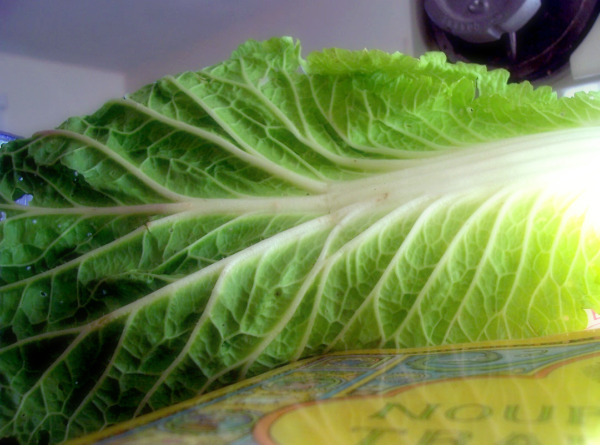
Start with two large heads of napa cabbage. Photograph using Nourishing Traditions as a tripod.
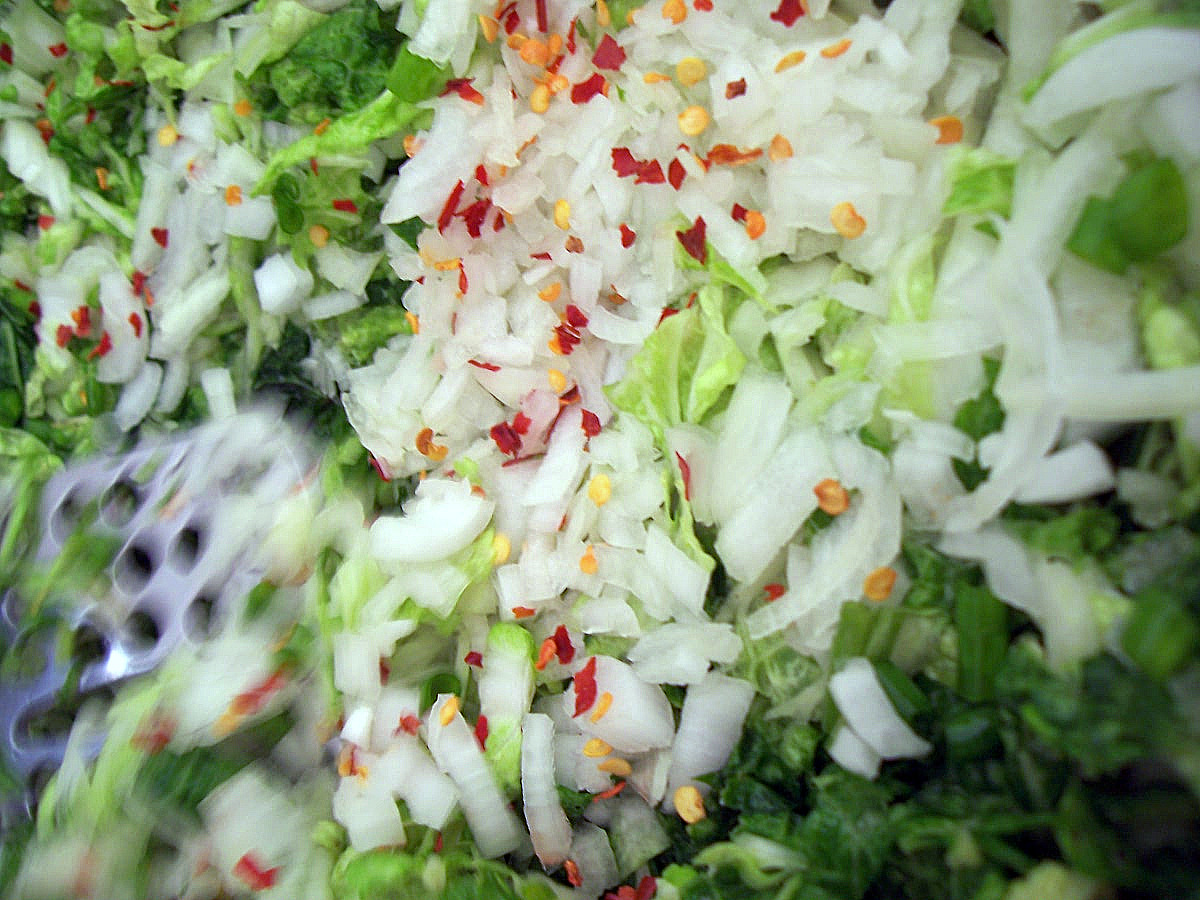
Combine the cabbage, green onions, pepper flakes, garlic, sea salt, and ginger in a very large bowl.
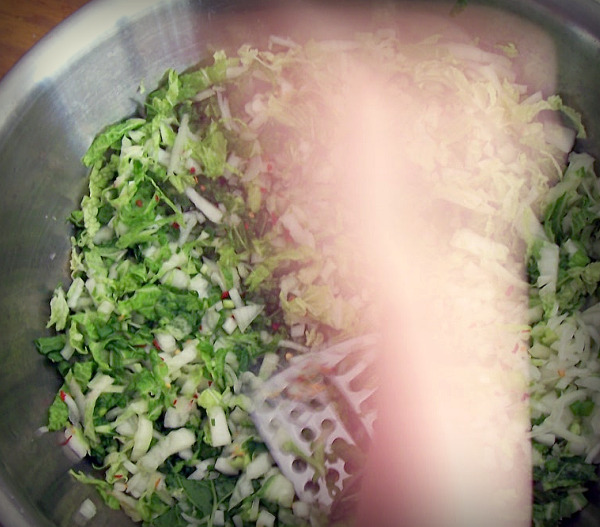
Let your children take turns bashing the juice out of the cabbage.
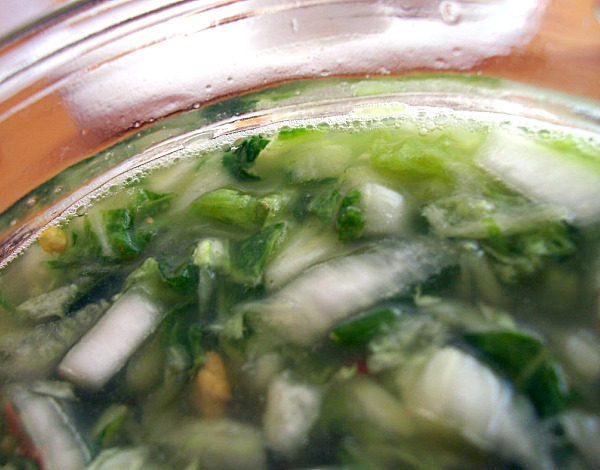
Ladle into jars, allowing liquid to cover cabbage.
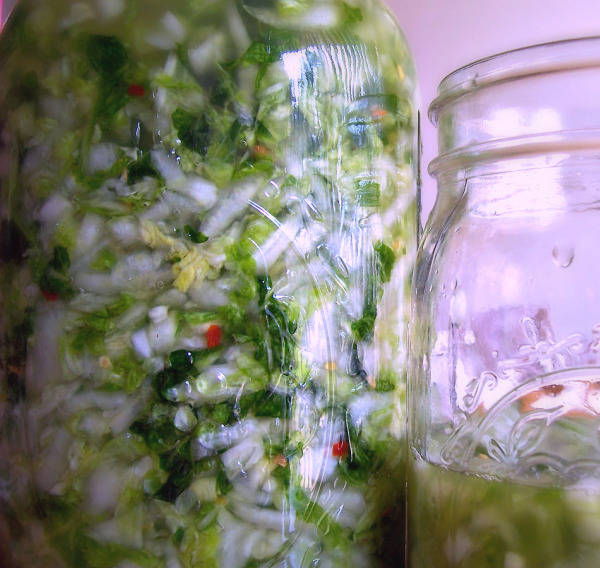
Allow to sit, at room temperature, for 2-3 days or until bubbling away. Place in cold storage – refrigerator or cellar. The flavors get better and better over time and the kimchi should keep for months.
It looks like we have a long summer of fermenting ahead of us – from pickles to kraut to salsa. I love how quick the whole process is.
What are you fermenting or preserving?
I have a question….Last week I made 2 batches (2 quarts) of lacto fermented salsa and let it sit on the counter for about 2 1/2 days. Asked hubby to put it in the basement. I meant the fridge. He thought I meant the canning cupboard. 3 days later he gets it out and eats some. Calls me concerned. Was that salsa supposed to go in the fridge or the cupboard??? The fridge. Great. I just ate some that I put in the cupboard. He lived to tell the tale and never got sick. It IS a bit on the fizzy side, tho it has been refrigerated since he opened it! You think it is OK?
Cindy
I have red cabbage in the garden that I need to harvest. I can’t wait to try this recipe out and read your article. More and more I’m finding that the health issues of the people around me – family and friends – come back to the gut. I need to make food with probiotics in them a daily part of our diet, and I need to get into the habit of making the food.
This is really interesting. It looks tasty.
I have taken several forays into lactofermentation, but have yet to run across a recipe that allows the vegies to remain crisp. I LOVE fresh kim chi and also make pikliz which is a spiced habenero hot type coleslaw from Haiti. These are not lactofermented, because they’d loose their texture, unless I’m doing something wrong.
I don’t see a recipe with measurements. Am I missing something?! I went out and bought all the ingredients but now I’m not sure where to go next! HELP!! 😀
Lori – Yes, this was more of a what we’re doing than a how-to post. Here are a couple of kimchi recipes for you: http://www.healthygreenkitchen.com/kimchi.html & http://gnowfglins.com/2011/01/05/kimchi-korean-sauerkraut/
The second one is very similar to how I make it. Hope that helps!
Thank you, Shannon!! I’m a measurement kinda gal. (your reply link wouldn’t work for me.) Gonna go start my adventure in lacto-fermenting!!
may I have the habenero type cole slaw recipe please.
Oh, kimchi is good! It’s kind of an acerquid taste, as you might imagine, it being fermented cabbage and all. 🙂 The process was quite simple and has room for personalization. It’s just chopped up cabbage and a few shredded carrots and green onions sitting in ginger, garlic, fish sauce, red pepper, and a little sugar. I can’t wait to see how it came out!