
making :: homemade apple peel vinegar
The coziness of fall has given me the itch to produce things in preparation for winter. Please join me over the next week (or two) as I share my series on making.
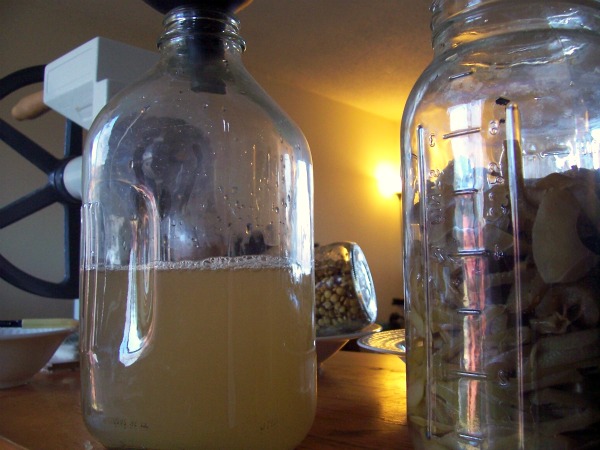
Do you remember in October when we were peeling dozens of apples for making apple butter? It seemed wasteful to put all of those peels straight into the compost without doing something culinary with them. I tried making apple peel pectin, but that was a major fail.
I remembered a buzz around the internet on making fruit peel vinegars and since one of our favorite vinegars is raw apple cider I thought I’d give it a shot. This was going to be essentially free, after all.
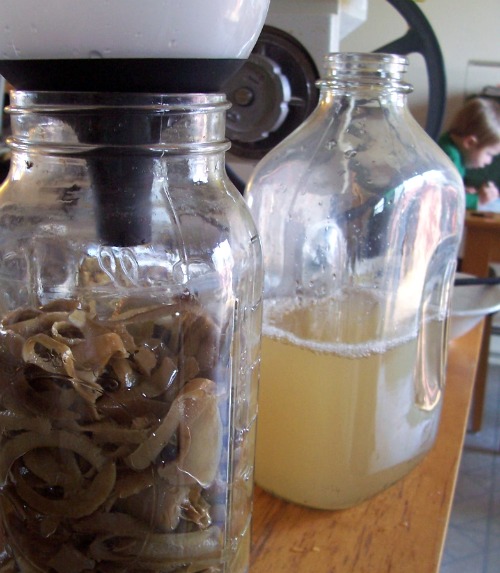
Here is my (very unscientific) method:
- Place your apple peels and cores into a half gallon mason jar. Pack them in well, but leave a couple of inches of head space.
- Pour filtered water over the whole thing until the peels are submerged.
- Keep the peels below the surface of the water somehow. A smaller-sized jar lid can work for this as well as filling a small plastic baggie with water. However you do it, make sure the peels stay below the water level.
- Cover with a towel, cheesecloth, or a coffee filter and a rubber band or canning ring.
- Allow to sit out in a warm place for about a month. Strain off liquid and store in a glass jar.
Yield: about one quart of raw apple peel vinegar.
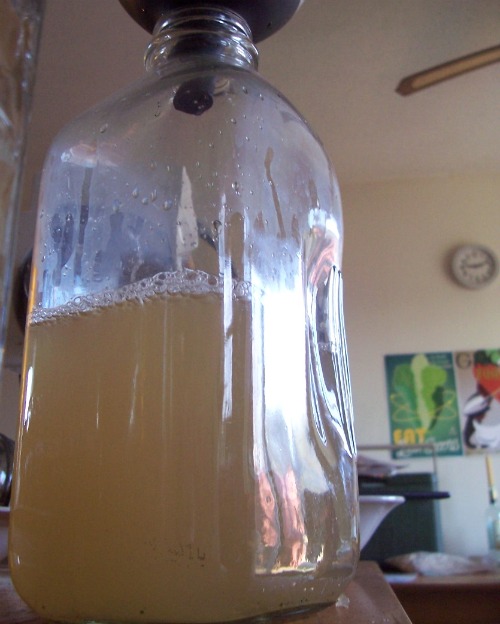
A gallon of raw apple cider vinegar costs around $15, so this is approximately a $7.50 savings for almost no effort. I’ll take it!
Have you ever made vinegar? :: What are you making right now?
I figured it was that easy, and most likely vinegar was an accident in the beginning. Thanks for posting this, I will look for more information as you continue to offer it.
I like to make vinegar with all my fruit scraps. The best one I’ve made so far is grapes and pear cores. Mmmm
Banana makes a horrible vinegar though. It just smells up the whole kitchen.
This is pretty cool! What a great idea! We usually give our fruit and veg scraps to our chickens, but I really want to try this!
looking forward to hearing about your results! we use a ton of ACV (the expensive, raw, organic kind), and i’ve often wondered how hard it would be to make.
as i write this there’s a gallon of “sweet potato fly” brewing in my kitchen–my attempt to create a low-cost, homemade sweet bubbly drink for thanksgiving, a la sandor katz. the results aren’t in on that one yet either…
thanks!
meg
Meg, if the sweet potato fly doesn’t fly (bad pun, sorry) give homemade gingerale a try. Maybe you could have it in time for Christmas or New Years. It’s fabulous and fizzy!
I wonder about innoculating it with a bit of raw ACV. I used water kefir in a bottle with a paper cone to catch fruit flies this summer. It turned to some sort of vinegar and made a nice, gelatinous “mother” of some sort. Of course it was full of fruit flies so it went into the compost. But I just love seeing what sorts of things are created with fermentation and bacteria 🙂
Excellent Article. Took me back to my childhood. Merry Christmas 2010!
How cool! I have never tried this. It looks so easy! Thanks for sharing.
My Aunt and Uncle make apple juice every year in large quantities. Do you think the pulp and apple left overs would also work in making vinegar. I’ll have to try it next year.
Do you know how to make other vinegars, like red wine vinegar?
After looking online, there’s several ways people make their own red wine vinegar – some are complicated and involve using a mother and others, like this guy’s http://www.chow.com/food-news/54317/how-to-make-homemade-vinegar/, seem incredibly easy. Do you think that it really could be as simple as letting your wine sit out like that?
If I subbed water for alcohol would it be apple peel extract? That is what I want to make. Thanks for your reply.
I have seen vinegar made from pineapple scraps and brown sugar.
I tried this, It has been about two weeks into the batch. I have this white film/layer on top. Is this normal, should toss it out? Very faint vinegar scent.???
No sugar with the water in this recipe?